
Amazing facts: 7 amazing facts about Antartica

7 Amazing Facts About Antarctica
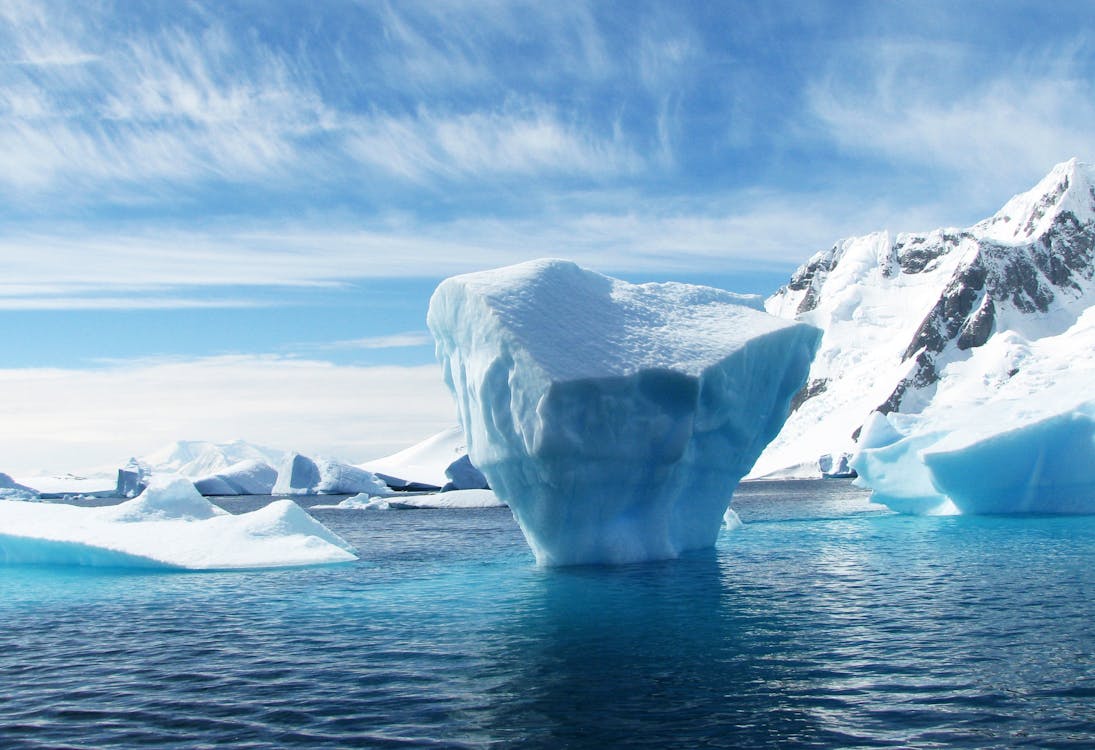
7 Amazing Facts About Antarctica

Courtsey: Pexels

Fact 1: Coldest Place on Earth

Antarctica is the coldest place on Earth, with temperatures dropping as low as -128.6°F (-89.2°C).

Fact 2: Largest Desert on Earth

Despite being covered in ice, Antarctica is considered the largest desert on Earth due to its low precipitation.

Fact 3: No Native Human Population

Antarctica has no native human population, and the Antarctic Treaty prohibits military activity and mineral mining, preserving it for scientific research.

Fact 4: Ice Sheet Thickness

The Antarctic Ice Sheet is the largest single mass of ice on Earth, containing about 60% of the world's fresh water.

Fact 5: Midnight Sun

During the Antarctic summer, parts of the continent experience the "midnight sun," where the sun remains above the horizon for an extended period.

Fact 6: Unique Wildlife

Antarctica is home to unique wildlife, including penguins, seals, and whales, adapted to the extreme conditions of the region.

Fact 7: Iceberg B-15

In 2000, the largest iceberg ever recorded, named B-15, broke away from the Ross Ice Shelf in Antarctica. It measured about 183 miles (295 km) long and 23 miles (37 km) wide.

#rg
#rgdimension
#rgdimensions
#amazing_facts
#amazing_facts_antartica

Popular posts from this blog

25 Angular Intermediate Interview Questions & Answers | RG Dimension

25 Angular Intermediate Interview Questions and Answers (2025 Edition) | rgdimension 25 Angular Intermediate Interview Questions & Answers (Updated for Angular 17–18) Concise, clear answers covering modern Angular (standalone components, signals, inject(), hydration, control-flow, DI, RxJS, performance, and testing). Courtsey: Pexels 1. What are standalone components and when should you use them? Standalone components (introduced and stabilized in recent Angular releases) allow components, directives, and pipes to be declared without NgModules; they declare their own dependencies via the standalone: true flag and import array, which simplifies app structure, reduces boilerplate, and makes lazy-loading and micro-frontends easier — prefer standalone components for new features and greenfield apps while incrementally migrating module-based code when beneficial. /* e...

CSS Flexbox: Understanding the basics

Understanding CSS Flexbox: A Complete Guide Understanding CSS Flexbox: A Complete Guide What Is Flexbox? Flexbox, or the Flexible Box Layout, is a CSS layout module designed to align and distribute space among items in a container, even when their sizes are dynamic or unknown. It simplifies creating responsive and flexible web designs. Why Use Flexbox? Flexbox eliminates complex float and positioning hacks. It allows developers to easily align elements vertically and horizontally and to control spacing, order, and responsiveness effortlessly. How Flexbox Works When you apply display: flex; to a container, it becomes a flex container. All its direct children become flex items that follow the Flexbox rules for layout a...

CSS Interview Questions And Answers

50 CSS Interview Questions and Answers 50 CSS Interview Questions and Answers 1. What does CSS stand for? CSS stands for Cascading Style Sheets. It’s used to style and layout web pages. 2. What is the difference between inline, internal, and external CSS? Inline CSS applies styles directly to elements, internal CSS is within a <style> tag in HTML, and external CSS uses a separate .css file. 3. What are CSS selectors? Selectors are patterns used to select and style elements on a web page. 4. What is the use of the z-index property? z-index controls the stacking order of elements that overlap. 5. What are pseudo-classes in CSS? Pseudo-classes define a special state of an element, like :hover or :focus. 6. What are pseudo-elements? Pseudo-elements style specific parts of an element, like :...